





Zanzibar’s Digital Infrastructure & Internet Connectivity
ZANZIBAR’s DIGTAL IT INFRASTRUCTURE
A nation’s Digital Infrastructure has become the lifeblood of all sectors of that nation’s society. In every country there are national infrastructure sectors which may include: Communications, Defence, Emergency Services, Education, Business, Energy, Finance (Commerce), Food, Government, Health, Transport and Water. Several nations have defined ‘sub-sectors’ like; Emergency Services for example can be split into Police, Ambulance, Fire Services and Coast Guard.
One core part of good IT Infrastructure is Internet Connectivity. We are constantly being asked “What is Zanzibar’s internet connectivity like?” or “Is there affordable, good, stable, fast internet in Zanzibar”?
With these questions in mind the increase in Digital Nomads choosing to live anywhere in the world, and the increase in the need to be connected and work online, we address the whole subject of Digital Connectivity and Digital Infrastructure on the island of Zanzibar.
1. DIGITAL CONNECTIVITY

Why is Digital Internet Connectivity so important? Well, Digital connectivity has become a necessity for the national health and welfare of Zanzibar with broadband and mobile services linking homes and businesses across the island of Zanzibar with the rest of the World.
With recent growth and expansion comes a growing demand for data, and therefore the speed, reliability, and capacity of broadband connections, is growing rapidly. Demand will continue to increase as businesses, homes and all types of economic infrastructure become smarter. The Covid 19 pandemic accelerated these trends and reinforced the fact that the provision of fast and reliable digital connectivity is now almost as central to society and the economy as the supply of electricity or water. Internet connectivity is integral to everything from education, to business, to healthcare.
For example; Hospitals and clinics in Tanzania mainland and Zanzibar are introducing ‘tele-health’ and online remote consultations. These consultations are done via online digital video connections. ‘Tele-health’ is a term given to the service given when a piece of healthcare equipment (eg blood-pressure monitor, mobile ECG etc.) is used by the patient (sat at home) that gives a readout that a doctor remotely located in a Zanzibar clinic can read digitally. In addition a doctor remotely located in Europe can join the consultation and is able to give immediate advice to the doctor in Zanzibar. A three-way remote online consultation.
Digital infrastructure consists of various interconnected networks which are owned and operated by different companies. Broadly, these networks are split into three different levels:
The core network is the backbone of the digital communications networks and is the “intelligent” part of the network, which identifies where the network’s subscribers are and ensures that data is sent to the correct user. It connects an operators’ network directly to the backbone of the internet.
The backhaul is the middle of the network and consists mostly of high capacity transmission lines that connect the core network to the local exchanges for fixed broadband or wireless base stations for mobile connections.
 The access network links directly to an end user’s equipment, such as routers or mobile phones, and connects them to the backhaul network.
Access networks for broadband include copper and fibre connections to premises, and for mobile connections, consists of networks of base stations.
Digital infrastructure is a complex and interdependent system of systems, but we will focus on those services that are accessed by consumers and businesses and broadly splits into two categories: fixed broadband and mobile connections.
Note: Within the next two years SATELITE CONNECTIONS will be introduced to East Africa by the Starlink Project (Elon Musk). This will undoubtable radically change the Digital Infrastructure in Zanzibar.h
2. BROADBAND Explained

Fixed broadband provides a continuous connection to the internet for homes and businesses, replacing previous ‘dial up’ connections. To use home broadband, customers usually connect devices wirelessly to a WiFi router. The router is connected through the wall to broadband cabling technology, which is normally supplied to the premises via a local ‘exchange’ box. The ‘exchange’ in turn connects via more cables to the exchange, which is part of the internet service provider’s network. There are a range of different service levels that fixed broadband can provide depending on which access technology is used:
Copper (ADSL) consists of a copper cable connecting the exchange to the cabinet and the cabinet to the premises. Copper networks are only capable of providing a basic level of connection and can be unreliable. Actual speeds delivered by copper connections diminish with distance.
Fibre Optic Cable to the exchange cabinet consists of a fibre cable connecting the exchange to the cabinet but a copper cable connecting the cabinet to the premises. Fibre to the cabinet can provide superfast connections but, like ADSL connections, is susceptible to faults and actual speeds diminish with distance between the cabinet and the premises.
Full Fibre to the premises consists of a fibre connection from the exchange all the way to the premises, normally bypassing the cabinet. It can provide gigabit connections and can be more reliable than the other technologies. Generally, distance to the premises does not affect the speed delivered and localised congestion can more easily be avoided.
BROADBAND INTERNET SPEEDS
 INTERNET SERVICE SPEEDS IN OTHER COUNTRIES
Firstly internet service is normally defined by Minimum Speed (stated in Mbits per second).
Here are some example categories of Minimum Speed and the activities that service can support:
Decent Broadband:
Usually at least 10Mbps (download) and 1Mbps upload. For making video calls, downloading a one-hour episode of high definition television (HDTV) in around 15 minutes.
Fast Broadband:
Usually at least 20-100Mbps (download) and 10Mbps upload. For small businesses or individuals working online ‘in the cloud’ for file transfers, small video production. Capable of supporting up to 10 devices at once at a single location, downloading a 1hourr episode of HDTV in around 5 minutes
Superfast Broadband
Usually 30Mbps to 300 (download) and up to 30Mbps upload. For larger business. Capable of supporting multiple devices at once, downloading a 1-hour episode of HDTV in around four minutes
Ultrafast Broadband
300 to 1000Mbps (download). Multiple people streaming ultrahigh definition TV at once, downloading an hour episode of HDTV in less than 30 seconds
Gigabit Broadband
1000 and above (download). Capable of downloading a high definition film in under one minute or a full 4K film in less than 15 minutes
 INTERNET SERVICE SPEEDS IN ZANZIBAR
(as of August 2022)
Most broadband (limited number of ISP’s):
Usually 2Mbps (download) and 1Mbps upload. Cost around $50-100 per month
Faster broadband (limited ISP’s):
Usually 10Mbps-100Mbps (download) and 4Mbps upload. Cost $100+ per month
3. Mobile Data & Voice Connections

Mobile networks provide telephony and data connectivity services to consumers by using a mobile phone as a terminal. Like fixed broadband, there are a range of different service levels that mobile connections can offer.
Mobile access network infrastructure consists of two main elements:
The radio access network:
The network of base stations providing cellular coverage across the UK, allowing mobile devices to transmit and receive data via the radio spectrum. Base stations vary in size and cost, but each requires an appropriate site with a power supply and a fibre or microwave connection to the backhaul network.
The radio spectrum:
Part of the electromagnetic spectrum, and is widely used for modern day telecommunications, broadcast TV and radio. Information can be transmitted over different frequency bands within the radio spectrum. The radio spectrum is a finite resource and so bands are allocated to users, the government has a duty in each country to ensure that the spectrum is efficiently used.
MOBILE DATA SPEEDS
 Type of Mobile Data Service available in other countries:
2G – The oldest available technology deployed in the UK, now mainly used for telephony services
3G – The first generation of service that enabled the use of internet services
4G – The most widely accessed technology, capable of delivering reasonable capacity broadband for video streaming
5G – The latest generation of mobile communication technologies, with the potential to provide ultra-reliable, low latency and very high capacity connectivity that can support new use cases across areas such as transport and the industrial Internet of Things
Mobile Data Service available in Zanzibar:
 4G LTE – There is no true standard for 4G LTE, it covers the entire range between 3G to 4G, giving it a massive range of potential speeds. On average, however, download speeds range from 1-5 Mbps, with faster speeds available in good coverage areas.
Mobile Data Coverage in Zanzibar:
Coverage can be patchy on the East Coast even though the island is flat – it does rely on the coverage provided by the relay masts. Stone Town is the more reliable area for reception – but it all does vary on Service Provider, distance from mast and device you are using. Zantel remains the most constant but it does depend on where you are located. Our advice would be try two or three mobile service providers out before deciding.
 4. SATELLITE WIRELESS DATA ACCESS
COMING SOON…
Fixed wireless access can also be provided by satellites. This is particularly important for premises where no other connection type is available. However, connections provided by geostationary satellites are have often provided poor quality due to the distance between the satellite and the premises it is connecting to.
This may change as more low earth satellite constellations are deployed, such as Starlink and One Web, which are closer to premises and therefore can provide better quality. Starlink is scheduled to come to East Africa in 2023.
 Satellite connectivity may be the biggest opportunity that Zanzibar has towards providing affordable, reliable, fast, internet connectivity to the island. If this happens the economy will benefit from opportunities for increased investment in ALL of the sectors vital to Zanzibar’s citizens and the Island’s Communications, Defence, Emergency Services, Education, Business, Energy, Finance (Commerce), Food, Government, Health, Transport and Water.
Like water, Zanzibar needs Internet Connectivity to flow fast, be affordable, accessible and reliable.
 Watch this space

Simply IT believes in SUSTAINABLE (long-term), AFFORDABLE (competitively-priced), LOCAL IT Solutions that meet international standards.
Many IT companies in East Africa talk about Digital Solutions. But we specialise in sustainable website design. We don’t just talk, we practice it. A sustainable IT solution is best designed and maintained by a professionally trained LOCAL support team. That’s why we are HERE in Zanzibar for you!
Simply IT is based in Zanzibar, is run by a Zanzibari and seeks to train locally.
If you want advice on IT in Zanzibar; be that Digital Marketing, Website Design, Search Engine Optimisation or anything else please contact us for a chat.
We are here in ZANZIBAR for YOU!

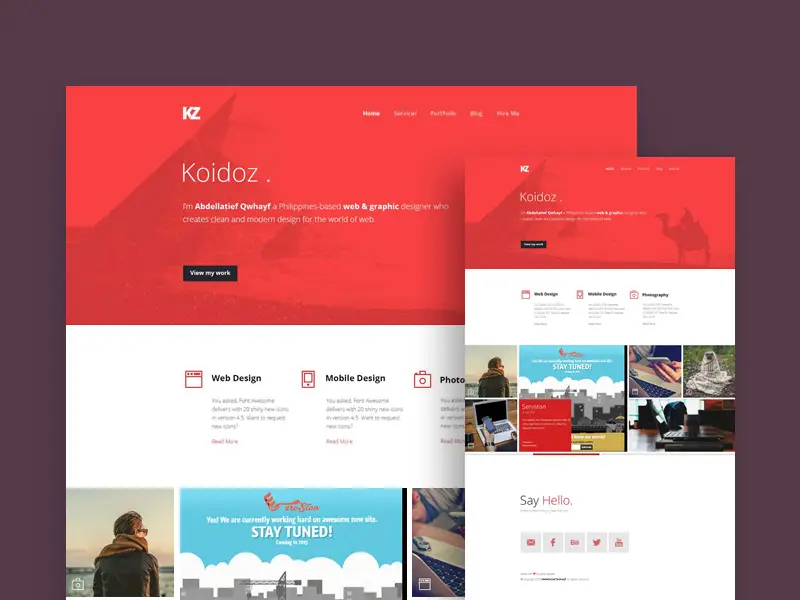

 First impressions really matter. We can’t stress this point enough: if you don’t have a strong web presence, you’re holding your brand back. A lot of potential customers who find you on Social Media often want to check out your business and ‘brand’ presence on your website.
 Good web design isn’t all just subjective. With other types of design, like illustration or sticker design, a lot of what constitutes “good” is up to the viewer’s taste. With web design, the line between “good” and “not good” is much more defined. A well-designed website is a website that perfectly creates the experience your visitor is looking for and it can be measured and analysed.
 Firstly, you have to attract users TO your website. This is the step that business owners and CEO’s often forget. Again this is SEO (Search Engine Optimisation).
 Let’s say you have a Chocolate Shop in Zanzibar. A visitor to your website typed “Best Handmade Chocolates in Zanzibar” to Google. They clicked on the results to go to your website and the first image they see is an image banner of a Zanzibar Waterfront or a beach… but absolutely no Chocolates in sight! Yes, it shows Zanzibar, but they aren’t looking for an empty skyline or a beach… they are looking for chocolates. The image is a distraction because it is not the main thing! If you want to show a Zanzibar waterline on your Chocolate Shop – put chocolates in the forefront or put images of the Zanzibar beach, skyline or your storefront on another page (About Us or Contact Us). Zanzibar is the location not the product!

 We’ve gone over what good design is. Now let’s talk a bit about what it isn’t.
 Wow! Getting web design right is a complex process and there are lots of things to look out for. Thankfully, you don’t have to do it alone. Firstly, you can go look at other websites online that you like. Secondly, choose a professional web designer you can rely on their skill to get the perfect result.
 A website designer can customize an existing template or design a completely fresh template for your website. If you want your website built from scratch, you can work with a designer and developer who has the skills to make it happen.








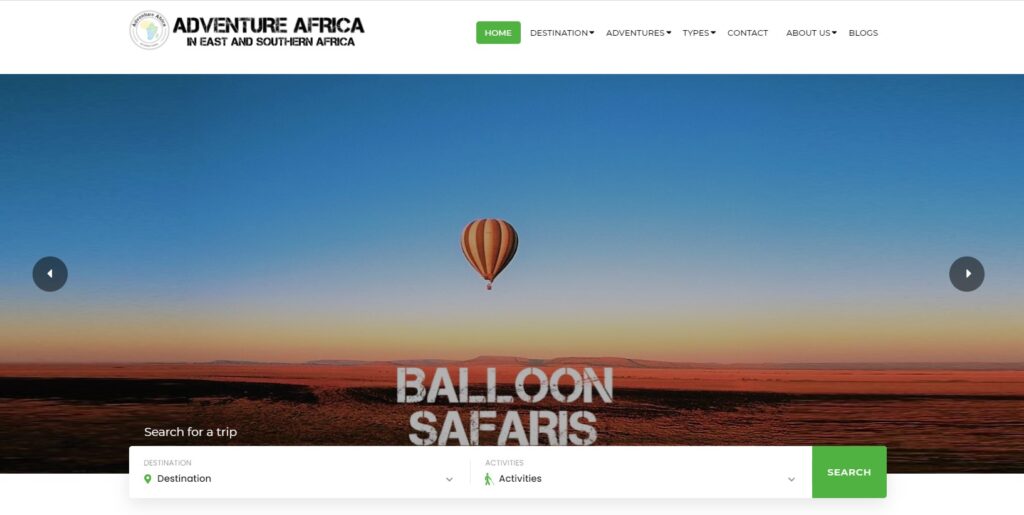

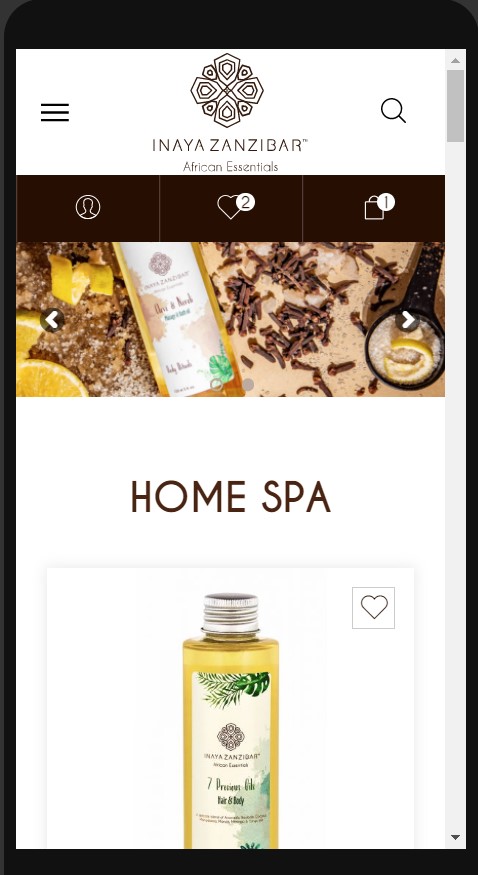
 It’s Hallowe’en as I write this and what better time to talk about one of the scariest things I guarantee you won’t have thought much about as you relax in the paradise island of Zanzibar.

 M
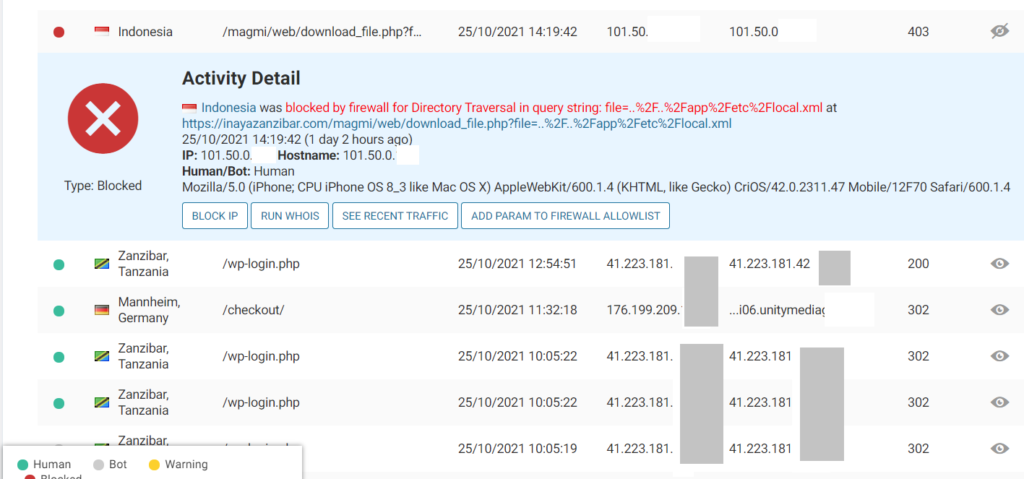
M When your server is hacked or compromised, it means someone else (in this case a hacker) is partially or entirely using your server resources to their advantage. They could be using it to pull off a number of misdeeds like:
 Mail spam is unavoidable. Millions of spam reports are sent every day which accounts for 59.56% of traffic on the internet (as of September 2017).
 Malware in WordPress can affect how visitors see your website. The user experience of a website is important for the success of the site (or business). If your users are not happy with your site’s performance, then they might not return to your site (or use your service – if you are offering one).
 You might have come across websites with shady pop-ups, usually on the top of the page asking you to go to a different site or make a purchase, etc.
 Pharma hacking is a very common phenomenon. On the web, there are restrictions on advertising illegal drugs like Viagra, Cialis, etc. Therefore, pharmaceutical sales websites resort to SEO spamming to get people to visit their site or make purchases. They often insert spammy keywords into posts and pages and cloak them from regular visitors.
 Have you been noticing a difference in your site’s performance lately? Did you try finding out the cause?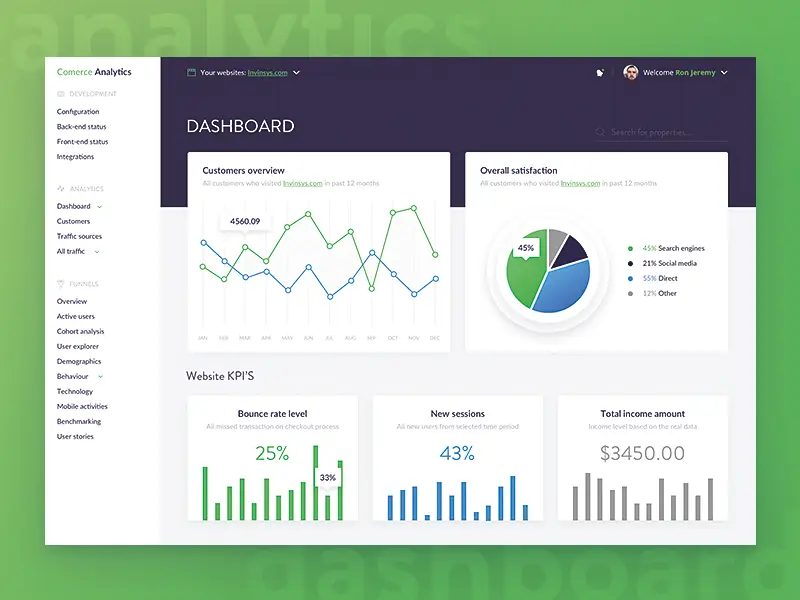


 As of May 4th 2021 the latest news is that Google have decided to introduce these changes gradually and not roll-out the final algorithm all at once (we hear the collective sigh of relief!).
 Google’s mission is intended to help users find the most relevant and quality sites on the web. The goal with these updates is to highlight the best experiences and ensure that users can find the information they’re looking for. Google’s work to achieve this is ongoing, which is why they plan to incorporate more page experience signals going forward and update them on a yearly basis. Google hopes that the tools and resources they provide make it easier for to create great websites, and thereby build a web ecosystem that users love.